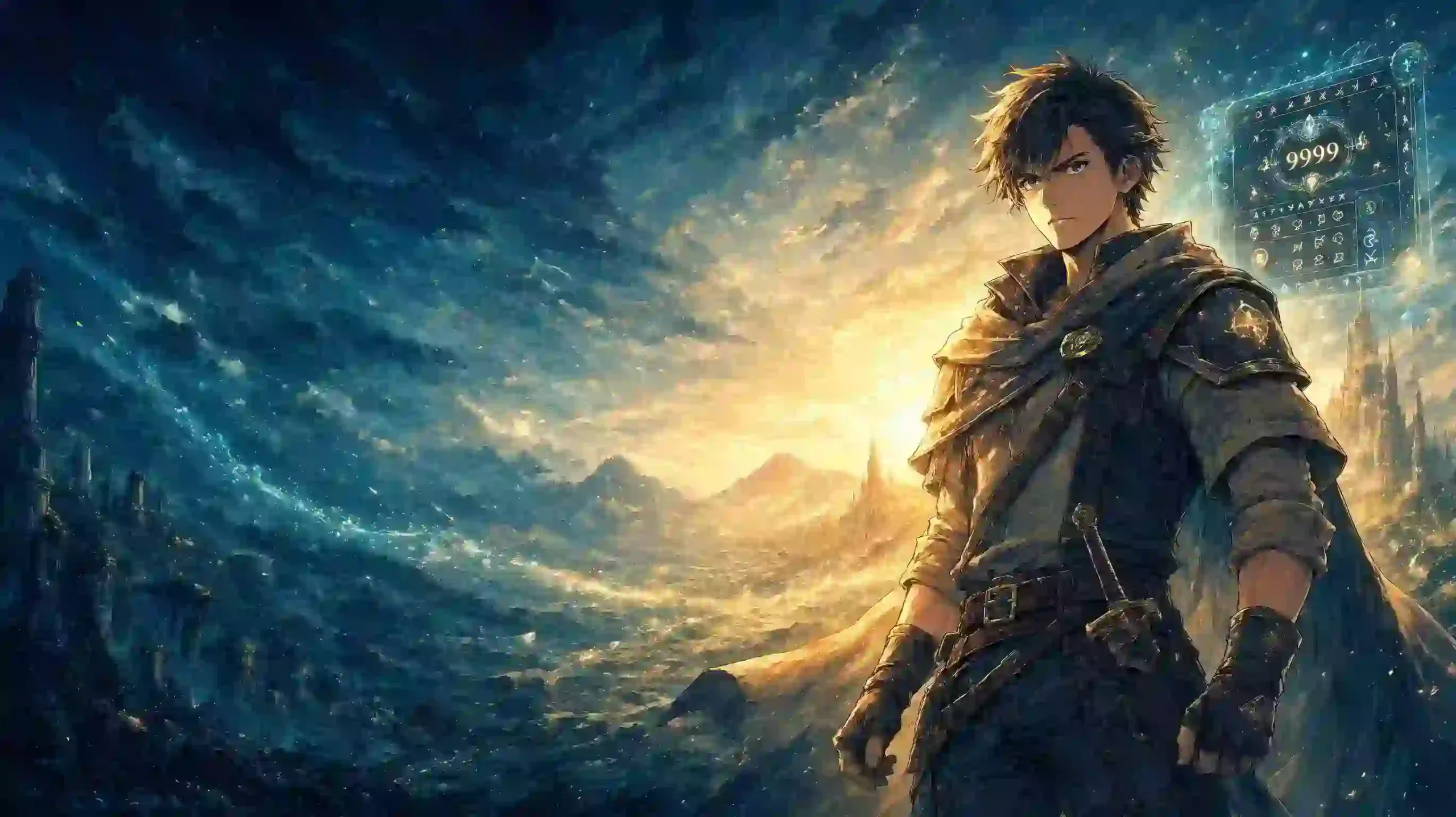
A lifetime of being dismissed as weak ends in an unexpected reset for Yukito Takahashi, a struggling adventurer whose status never seemed to improve. In Because I’m Super Lucky I Got A Second Chance, a mysterious system error sends him back to his younger self with extraordinary stats—and a chance to make different choices. This guide explains the premise, genre, characters, appeal, and practical ways to follow the series, while separating confirmed details from questions the ongoing story has yet to answer.
Quick facts about the series
| Detail | Information |
|---|---|
| Common English title | Because I’m Super Lucky, I Got a Second Chance at Life |
| Alternate title | Chou Koun no Oredake Jinsei Kaiki |
| Japanese title | 超幸運の俺だけ人生回帰 |
| Main character | Yukito Takahashi |
| Creator credit | Hozumi Susumu |
| Art credit | Creative House Pocket |
| Publisher / serialization association | HykeComic |
| Format | Full-color, vertical-scroll comic |
| Genres | Action, adventure, fantasy, drama, shonen |
| Core story devices | Regression, status system, magic, overpowered protagonist |
| Status | Ongoing; chapter counts can vary by platform and date |
What is Because I’m Super Lucky I Got A Second Chance about?
Because I’m Super Lucky I Got A Second Chance follows Yukito Takahashi, a G-rank adventurer who spends decades being treated as a failure. In the world’s level-based system, he keeps working to grow stronger, yet his stats do not rise as expected. His long-held wish—to return to youth with the strength he never had—seems impossible until he dies on an adventure.
After his death, a system message identifies a critical status-system error and rolls his life back. Yukito returns to an earlier point in life, but this time his attributes are shown at an astonishing 9999. The reset gives him the power he lacked, though it also creates a new question: what will he do with a life that has been restarted under radically different conditions?
The hook blends a second-life fantasy with game-like mechanics. Instead of beginning as a celebrated champion, Yukito starts from a history of frustration, humiliation, and missed opportunity. The appeal comes from watching him face a familiar world with knowledge of what went wrong and abilities that rewrite the limits he once accepted.
Why readers search for this manga
Readers often discover the title through searches for regression fantasy, lucky protagonists, overpowered adventurers, or stories where a weak character receives a second chance. The series combines all four ideas in a clear, easy-to-grasp premise. Its dramatic contrast—decades of failure followed by a reset with extraordinary stats—makes the central fantasy immediately understandable.
The story also offers a strong emotional starting point. Yukito is not simply a powerful character who appears at the top of the world. He remembers what it felt like to be underestimated. That past can shape how he treats allies, rivals, and people who are still struggling. Readers who enjoy power progression may come for the 9999-stat premise, while fans of character-driven fantasy may stay to see whether a changed life changes Yukito himself.
Searchers may also encounter variations in the English title, romanized title, spelling, and chapter listings. This article uses the familiar English title and identifies the alternate name so readers can recognize the same work across catalogs. It does not promise that a particular unofficial listing is complete, current, or authorized.
The premise: an adventurer’s life reset
Yukito’s first life establishes the problem the story wants to overturn. He works within a world where rank and status influence how others judge an adventurer. Despite continuing to level up, his attributes remain stuck. The result is a painful mismatch: effort does not bring the growth he expects, and other people interpret the lack of progress as proof that he has no value.
His death is the turning point, not the end of the story. The system’s rollback returns him to a younger version of himself. The enormous status values create immediate possibilities, but the reset is more than a simple upgrade. Yukito carries memories from the life he lost, and those memories may help him recognize dangers, avoid old mistakes, and understand the cost of being powerless.
That combination creates the series’ central engine: old knowledge meets new potential. Every new challenge can test whether Yukito acts from experience or relies only on overwhelming stats. The narrative can use battles to show the scale of his new strength, while social and moral choices reveal what kind of person he intends to become.
How the status system shapes the story
Game-like status panels are a familiar tool in modern fantasy comics. They turn abstract growth into visible numbers and make it easy to compare characters. Here, the system is especially important because it represents the obstacle that defined Yukito’s first life. His stats once appeared incapable of improving; after the rollback, their extreme values signal a reversal of that old verdict.
The numbers offer quick spectacle, but they also raise useful story questions. Does a high stat guarantee good judgment? Can strength repair years of regret? How does a person use power when the rules that once constrained him no longer apply? The best progression stories use their mechanics to create choices, not only to display bigger numbers.
Readers should treat system details as part of the fictional world rather than as a complete, real-world rulebook. The exact limits of Yukito’s abilities, how the bug occurred, and whether the new status values have costs are matters for the comic to explain over time. Since the series is ongoing, it is safer to distinguish the established premise from predictions about future mechanics.
Yukito Takahashi: more than an overpowered hero
Yukito’s defining trait is the contrast between his past and his second start. He has experienced a long period of stagnation and ridicule, yet receives a chance that few people could imagine. That history can make him sympathetic: readers understand why he wants a different outcome and why the sudden change matters so much.
His new strength also creates a character test. If he responds to every problem by overpowering it, action scenes may be satisfying but his growth could remain shallow. If he uses his memories to protect others, build trust, or make choices he once lacked the courage or ability to make, the second life carries emotional weight. The key question is not only how strong he becomes; it is what he chooses to do with the strength.
Yukito’s perspective gives the series room to explore regret without turning the story into a bleak drama. A fresh start can be exciting, funny, and triumphant while still acknowledging that lost time cannot simply be erased. The character’s past remains part of him, even when his circumstances change.
Themes behind the second-chance fantasy
Regret and the wish to begin again
Many people imagine what they would change if they could return to an earlier moment. Fantasy makes that thought literal. Yukito’s rollback allows the story to explore regret through action: the protagonist can encounter the world again, but this time he has knowledge and opportunities that were missing before.
Recognition and self-worth
Being labeled useless can shape how a person sees themselves. Yukito’s history gives the series a way to question whether a ranking system can capture someone’s real worth. His new stats may force others to notice him, but recognition built only on power is not the same as respect earned through character.
Power and responsibility
An overwhelming advantage can solve immediate threats, but it also changes the balance between people. A compelling hero must decide when to intervene, whom to trust, and how to use strength without becoming the very kind of bully he once suffered from. That tension is a natural source of conflict as Yukito moves through his second life.
Luck, systems, and unfair outcomes
The title foregrounds luck, while the plot invokes a system error. Together, they point toward a question: is Yukito’s new life a reward, a glitch, or a strange accident? The story can use that uncertainty to examine how much success comes from effort and how much from circumstances beyond a person’s control.
Genre and format: what to expect
Because I’m Super Lucky I Got A Second Chance sits at the intersection of fantasy adventure and regression fiction. Its action and magic provide external conflict, while the protagonist’s return to youth supplies a personal reset. The status interface brings in the language of role-playing games, and the long-strip, full-color format suits quick, visually clear reading on a phone.
Readers who enjoy these elements may find the series a good fit:
- A protagonist who gains an extraordinary advantage after a difficult first life.
- Leveling, stats, ranks, and system messages.
- Fantasy adventuring, magic, monsters, and danger.
- A second chance that lets the hero act on past knowledge.
- A fast-moving, illustrated story built for episodic reading.
Readers looking for a slow, realistic drama or a story where the hero remains weak for a long time may find the power fantasy less aligned with their taste. The premise promises a dramatic change in capability, so readers should expect the central wish-fulfilment element to matter.
What makes the series stand out—and what may not
The clearest strength is its easy-to-understand hook. The idea of an adventurer who failed to improve, died, and returned with maximum stats gives new readers a quick reason to try the opening. The second-life framework also makes past experience relevant: Yukito is not starting with a blank mind, even if the world has given him a younger body.
The same premise carries a challenge. When a hero has extraordinary stats, ordinary fights can lose suspense unless the story creates different kinds of stakes. The series can keep tension through unknown rules, emotional consequences, vulnerable companions, enemies with their own advantages, or decisions that cannot be solved by force. Readers may want to watch how the comic balances spectacle with character and world-building as it continues.
A fair recommendation should acknowledge both sides. If the main draw is an underdog’s dramatic reversal and energetic fantasy action, the concept is appealing. If a reader needs complex strategy, tightly defined limitations, or a long gradual climb from weakness to strength, the initial power setup may feel too direct. Taste depends on which part of the premise matters most to the reader.
Character and story entities to know
An entity in a topical guide means a clearly identifiable person, work, organization, or concept connected to the subject. Recognizing these entities helps readers understand how the title fits into its publishing and genre context.
| Entity | Role in the topic | Why it matters |
|---|---|---|
| Yukito Takahashi | Protagonist | His failed first life and reset drive the story. |
| Hozumi Susumu | Creator credit | A key name associated with the work in catalog listings. |
| Creative House Pocket | Art credit | The credited art studio/creator group. |
| HykeComic | Serialization/publishing association | Helps identify the work’s original publication context. |
| Chou Koun no Oredake Jinsei Kaiki | Romanized alternate title | Useful when searching catalogs beyond English title variants. |
| 超幸運の俺だけ人生回帰 | Japanese title | The original-language title shown in series records. |
| Regression fantasy | Genre concept | Describes a protagonist returning to an earlier point in life. |
| Status system | Story device | Provides measurable attributes and progression rules. |
Credit details and platform labels can differ among catalogs, especially when a title is listed through translation or distribution partners. Check the series’ official publisher or creator record for the most authoritative credit information. Do not assume that every site using the same title is an official reading service.
Is Because I’m Super Lucky I Got A Second Chance worth reading?
It is worth sampling if you enjoy fantasy comics built around regression, overpowered protagonists, and visible stat progression. The premise delivers a clear emotional promise: a man who once could not improve gets another chance with a startling advantage. That setup makes the opening chapters easy to approach, even for someone new to the genre.
Before committing, consider what you want from a series. If you like quick action and the satisfaction of watching a dismissed hero change how the world sees him, the concept may land well. If your favorite stories focus on slow-earned strength, intricate political plots, or tightly balanced combat, look at a preview and judge the pacing for yourself.
Because the story is ongoing, the long-term value will depend on how it develops Yukito, explains the system, and gives meaningful obstacles to a highly capable lead. A reader-friendly guide should not promise that every future chapter will meet a particular expectation. Start with a few chapters, then decide whether the mix of action, fantasy, and second-life drama works for you.
Reading guide: how to follow the series responsibly
Search results may show multiple sites with chapter lists, fan translations, or copied scans. A title appearing in a search engine does not automatically mean the page has permission to distribute it. To support the creators and reduce the risk of unsafe pages, look first for the official publisher, licensed services, or a verified platform linked from the publisher’s own catalog.
Use this simple checklist when checking where to read:
- Confirm that the platform identifies its publisher or licensing relationship.
- Check whether the title’s creator and series details match the official listing.
- Review the platform’s privacy, payment, and account policies before registering.
- Avoid pages that demand suspicious downloads, browser extensions, or unrelated personal information.
- Remember that chapter availability and release schedules can vary by region.
Do not rely on an unofficial chapter count as a definitive publication total. Chapters may be grouped, split, translated at different times, or updated after a platform changes its listing. For the freshest publication and licensing information, consult the original publisher or an official distributor directly. This guide intentionally does not link to reading sites.
Similar story elements for manga and manhwa fans
Readers who like this title may also enjoy exploring the broader category rather than searching only for a near-identical plot. Useful related concepts include regression manga, second-chance fantasy, time rewind stories, level-up adventure, magic-system fiction, and overpowered protagonist comics. These phrases describe story patterns; they are not claims that every work in those categories has the same tone or quality.
When selecting a related series, consider the feature you most want:
- For emotional payoffs, look for protagonists whose earlier failures affect their later decisions.
- For tactical battles, seek stories with clear limits, costs, or rules for powers.
- For fast wish fulfilment, choose titles that foreground rapid growth and dramatic victories.
- For world-building, look for series that explain how ranks, guilds, magic, and social status interact.
- For character relationships, prioritize stories that give allies goals beyond supporting the main hero.
This approach helps readers find a better match than a list based only on the word “regression.” It also makes recommendations more useful because it connects the genre label to the actual reading experience a person wants.
Common misunderstandings about the title
Is the protagonist lucky from the beginning?
The premise begins with Yukito’s difficult first life, not a simple history of effortless success. The second chance and extreme stats create the unusual advantage that gives the title its hook. “Lucky” describes the striking turn in his circumstances, while the earlier hardship remains important context.
Does a second life erase the first one?
No. The rollback changes Yukito’s circumstances, but the premise depends on his memories and past experience. His first life gives emotional context to the new one. The exact way the story handles memory and consequences should be judged from the chapters themselves.
Are 9999 stats the only source of tension?
They are a major part of the hook, but they need not be the only source of conflict. The story can create tension through unknown system rules, relationships, decisions, or challenges that strength alone cannot resolve. How successfully it does so is part of the reading experience.
Is every website using the title official?
No. Search visibility does not prove a site has publishing rights. Confirm authorization through the publisher or a licensed distributor before reading or paying.
Frequently asked questions
1. What is the full title of Because I’m Super Lucky I Got A Second Chance?
The commonly listed English title is Because I’m Super Lucky, I Got a Second Chance at Life. The series is also known by the romanized title Chou Koun no Oredake Jinsei Kaiki and the Japanese title 超幸運の俺だけ人生回帰.
2. Who is the main character?
The protagonist is Yukito Takahashi, a G-rank adventurer whose stats fail to improve during his first life. After his death, a system rollback sends him back to youth with extraordinary attributes.
3. What genres does the series include?
Catalog descriptions commonly place it in action, adventure, fantasy, and drama, with shonen, magic, and time-regression elements. Genre tags can vary between databases and publishers.
4. Is the manga complete?
The series is listed as ongoing in the catalog records consulted for this guide. Release status can change, so check the publisher’s current series page for the latest official update.
5. Who created the series?
Catalog listings credit Hozumi Susumu and Creative House Pocket. HykeComic is associated with its serialization. For publication-critical details, verify the current official publisher record because third-party databases sometimes present credits differently.
6. Where can I read it legally?
Start with the original publisher’s official catalog or a licensed digital-comics service available in your region. Check the service’s licensing information rather than assuming a search result or fan translation is authorized.
A clear answer for new readers
Question: Should I try Because I’m Super Lucky I Got A Second Chance if I like regression fantasy?
Answer: Yes, it is a sensible title to sample if you enjoy second-life stories, fantasy adventuring, system stats, and a protagonist who moves from long-term failure to sudden power. Its premise is direct and its visual format suits episodic reading. Try the opening chapters through an authorized source and decide whether Yukito’s mix of past regret and new strength keeps you interested.
Question: What is the central appeal?
Answer: The series turns a familiar “what if I could start again?” wish into an action-fantasy plot. Yukito knows the pain of being dismissed, then returns with the ability to change his prospects. The central pleasure is seeing how he uses that opportunity—and whether strength helps him build a better life.