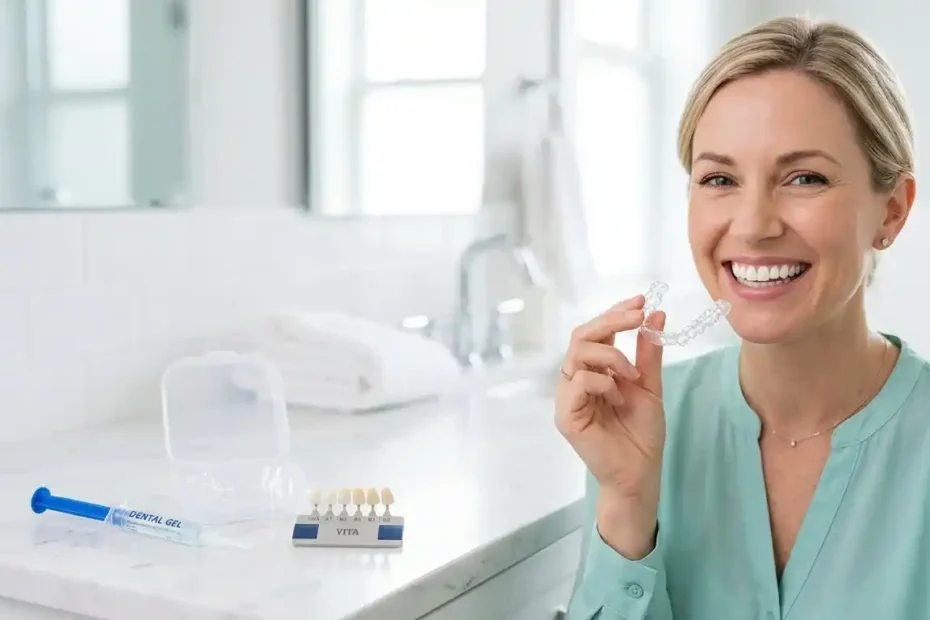
Your smile is dulled by time, coffee, tea, and red wine. You brush twice a day, but the yellow tint stays. Strips slide off, whitening toothpaste barely helps, and a chairside session can cost a few hundred euros. Whitening trays fix that problem. They hold peroxide gel against your teeth at home, evenly and safely. This guide covers how they work, which type fits you, and how to get results that last.
What Are Whitening Trays?
Whitening trays are thin, flexible mouthguards that you fill with a bleaching gel and wear over your teeth. The tray keeps the gel pressed against the enamel so the active ingredient can work on stains.
Most trays are made of soft plastic called EVA (ethylene vinyl acetate). They come in three main styles:
- Custom-fitted trays made by a dentist from an impression or 3D scan of your teeth
- Boil-and-bite trays that you soften in hot water and shape at home
- Prefilled disposable trays that come loaded with gel and go in the bin after one use
The tray only holds the gel. The gel does the whitening.
How Do Whitening Trays Whiten Teeth?
The gel inside the tray contains either hydrogen peroxide or carbamide peroxide. Both release oxygen molecules that pass through the enamel and break apart the stain compounds (called chromogens) in the dentin underneath.
Carbamide peroxide breaks down into about one-third hydrogen peroxide. That means a 10% carbamide peroxide gel works roughly like a 3.5% hydrogen peroxide gel, just more slowly and gently.
A good tray seals the gel in and keeps saliva out. That seal is the main reason tray systems beat many other home options for even color.
Types of Whitening Trays Compared
Each tray style trades off cost, comfort and results. To compare them side by side, use this table.
| Feature | Custom Dentist Trays | Boil-and-Bite Trays | Prefilled Disposable Trays | LED Kit Trays |
|---|---|---|---|---|
| Fit | Exact, made from your scan | Moderate, shaped at home | Loose, one-size | Varies by brand |
| Typical cost (EU) | €200–€450 | €25–€60 | €30–€70 | €40–€120 |
| Gel strength | Up to 6% HP (dentist-supervised in EU) | Up to 0.1% HP over the counter (EU) | Up to 0.1% HP over the counter (EU) | Up to 0.1% HP over the counter (EU) |
| Gum irritation risk | Low | Medium | Medium to high | Medium |
| Time to visible results | 1–2 weeks | 2–4 weeks | 2–3 weeks | 2–4 weeks |
| Reusable? | Yes, for years | Yes, for months | No | Usually yes |
| Best for | Deep stains, lasting results | Budget buyers | Travel, first-timers | Gadget fans |
HP = hydrogen peroxide. Limits reflect EU rules. In the US and some other markets, stronger gels are sold over the counter.
Custom Trays vs. Over-the-Counter Kits
A custom tray hugs every curve of your teeth. The gel stays where it belongs, so less of it leaks onto your gums. Dentists can also prescribe stronger gels and check your teeth for problems before you start.
Over-the-counter kits cost far less and ship to your door. The downside is fit. A loose tray lets gel pool in some spots and miss others, which can leave patchy results and sore gums.
If you have crowded teeth, a strong gag reflex or deep stains, custom whitening trays usually pay for themselves in comfort and results.
What the Research Says About Tray Whitening
Tray whitening with carbamide peroxide is one of the best-studied cosmetic dental treatments. A Cochrane systematic review of home-based tooth whitening found that at-home bleaching products whiten teeth better than placebo over the short term. It also found that tooth sensitivity and gum irritation were the most common side effects.
The American Dental Association notes that peroxide-based bleaching works on surface and deeper stains. It does not alter the color of fillings, veneers, or crowns.
Key takeaways from the evidence:
- Peroxide gels in trays produce a visible, measurable shade change
- Although prevalent, sensitivity is typically modest and transient.
- Results depend on stain type, gel strength and how often you wear the tray
Are Whitening Trays Safe?
Yes. Whitening trays are safe for most healthy adults who follow the directions. The main risks are temporary sensitivity and gum irritation from gel that spills past the tray edge.
In the European Union, Council Directive 2011/84/EU sets clear limits. Products sold directly to consumers may contain no more than 0.1% hydrogen peroxide. Products with 0.1% to 6% may only be supplied through dental practitioners, and the first use must happen under a dentist’s supervision. The same rules ban sale of these products to anyone under 18.
See a dentist beforehand or forego at-home teeth whitening if you:
- Are pregnant or breastfeeding
- have untreated gum disease, cavities, or fractured teeth
- Have exposed roots or worn enamel
- Have front crowns or veneers that won’t change color
Who Gets the Best Results?
Yellow stains from food, drinks and aging respond best to peroxide. Brown stains respond more slowly. Gray or blue-gray stains from tetracycline antibiotics or trauma can take months and may never fully lift.
Your natural shade matters too. People with naturally yellow teeth often see a bigger jump than people whose teeth are already gray.
Smokers can still whiten, but the stains come back quickly unless the habit changes.
Step-by-Step Guide on Using Whitening Trays
Good technique protects your gums and gives you even color. Follow these steps every session:
- Brush and floss first. The gel can penetrate the enamel of clean teeth. Wait about 30 minutes after brushing so your gums settle.
- Add a small amount of gel. Place a rice-grain-sized drop in each tooth space on the front side of the tray. More gel does not translate into quicker outcomes.
- Seat the tray gently. Press it into place and wipe away any gel that squeezes onto your gums with a cotton swab or tissue.
- Wear it for the set time. This ranges from 30 minutes to overnight, depending on the gel strength.
- Rinse and clean. Remove the tray, rinse your mouth, and wash the tray in cool water with a soft brush.
- Store it dry. Keep the tray in its case, away from heat that could warp the plastic.
How Long Until You See Results?
Most people notice a lighter shade within 5 to 7 days of daily use. The full effect usually shows after 10 to 14 days with custom trays. Weaker over-the-counter gels can take three to four weeks.
Teeth often look brightest right after a session because they’re slightly dehydrated. Judge your true shade 48 hours after your last treatment.
Track your progress with a shade guide or photos taken in the same daylight each week.
Managing Sensitivity and Gum Irritation
Sensitivity feels like a quick zing when you drink something cold. It usually fades within a day or two after you stop.
Simple ways to stay comfortable:
- Brush with a potassium nitrate toothpaste for two weeks before and during treatment
- Wear the trays every other day instead of daily
- Shorten each session
- Switch to a lower-strength gel
- Trim tray edges so they sit just below the gumline
If pain lasts more than a few days or your gums turn white and sore, stop and see your dentist.
How Long Do Results Last?
Tray whitening results usually last 6 months to 2 years. Your habits decide which end of that range you land on.
Coffee, black tea, red wine, cola, berries and tobacco all bring stains back faster. Drinking through a straw and rinsing with water after dark drinks both help.
One big advantage of reusable trays is easy touch-ups. One or two sessions every few months keeps your shade steady for the cost of a gel refill.
Caring for Your Trays
Clean trays last longer and stay hygienic. Rinse them in cool water after every use. Hot water can warp them.
Brush them gently with a soft toothbrush and mild, unscented soap. Skip toothpaste, which scratches the plastic and makes it cloudy.
Replace your whitening trays if they crack, warp or stop fitting snugly. This often happens after dental work or orthodontic treatment.
Cost Breakdown: Is It Worth It?
Here’s how the options stack up in euros:
- Chairside whitening: €300–€700 per session
- Custom dentist trays plus gel: €200–€450, then €20–€40 per refill
- Boil-and-bite kits: €25–€60
- Whitening strips: €20–€50 per box
Custom whitening trays cost more upfront but less over time, because you reuse them for touch-ups. For most people who want lasting results, they’re the best value.
Whitening Trays vs. Strips vs. Chairside Whitening
Strips are cheap and easy, but they cover only the front six to eight teeth and can slip. Chairside whitening gives the fastest results in one visit, at the highest price. Trays sit in the middle, with strong results, full coverage and low long-term cost.
If you want speed, pick chairside. If you want the lowest cost, pick strips. If you want the best balance, trays win.
Common Mistakes to Avoid
Many poor results come down to a few habits:
- Overfilling the tray: Extra gel burns gums and does nothing for your teeth
- Wearing trays longer than directed: This raises sensitivity without faster whitening
- Whitening right after a meal of dark foods: Brush first
- Buying unregulated gels online: Illegal high-peroxide or chlorine dioxide products can damage enamel
- Expecting fillings to change: Plan any replacement fillings after whitening
Frequently Asked Questions
Do whitening trays work on sensitive teeth?
Yes. Whitening trays work on sensitive teeth if you use a low-strength gel, shorter sessions and a desensitizing toothpaste. Wearing them every other day also cuts discomfort a lot.
How many hours a day should I wear whitening trays?
It depends on the gel. Light over-the-counter gels often need 30–60 minutes. Dentist-supplied 10% carbamide peroxide is often worn 2 hours or overnight. Follow your product’s directions.
Can I sleep with whitening trays in?
Only if your dentist says so and your gel is designed for overnight use. Low-strength carbamide peroxide gels often are. Never wear high-strength hydrogen peroxide overnight.
Are custom whitening trays better than store-bought ones?
For most people, yes. Custom trays fit exactly, so gel stays on your teeth and off your gums. That means more even color and less irritation.
Can I eat or drink while wearing trays?
No. Remove the trays to eat or drink anything except water. After a session, avoid coffee, tea and red wine for at least an hour while your enamel settles.
Do whitening trays damage enamel?
No, not when used as directed. Research shows that approved peroxide gels do not cause lasting enamel damage. Overuse and unregulated products are the real risks.
Take the First Step Toward a Brighter Smile
A whiter smile is closer than you think. Whitening trays give you results you can see, at home, without a dentist’s chair price for every session. Start with a quick dental checkup so any cavities or gum problems get treated first. Then choose the tray style that fits your budget and comfort.
Book that checkup this week, ask your dentist about custom trays, and take your first before photo. In two weeks, you’ll have an after photo you’ll want to show off.