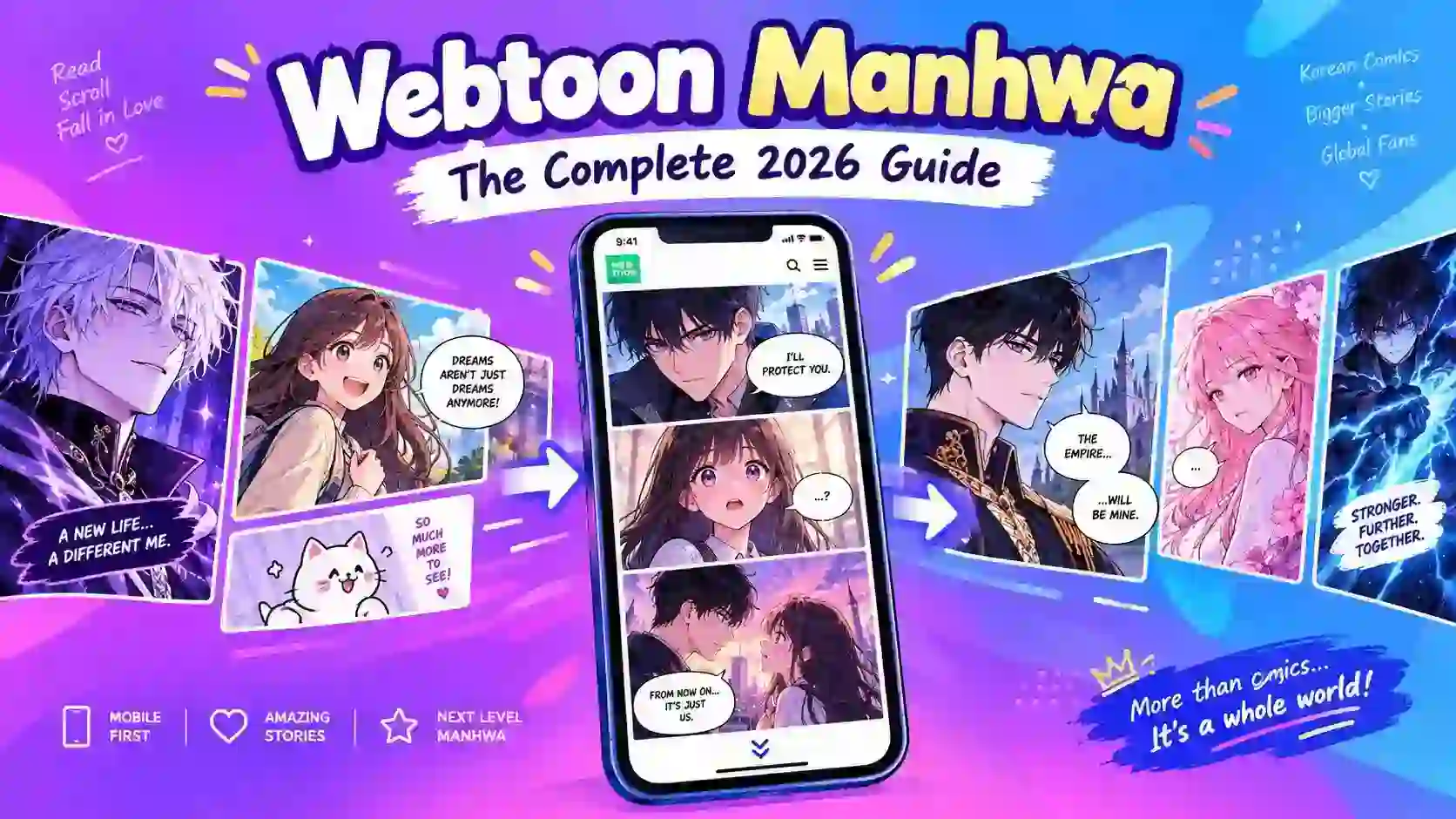
If you have opened a comic app on your phone lately, you have probably scrolled endlessly through a colorful, vertically stacked story without ever turning a page. That experience is exactly what a webtoon manhwa is built for. The format has moved from a Korean niche into a global habit, powering billion-dollar platforms, hit anime adaptations, and careers for thousands of independent creators. This guide explains what the format is, how it works, where to read it, how it is made, and why it keeps winning on mobile screens in 2026.
What Is Webtoon Manhwa? A Clear Definition
A webtoon manhwa is a Korean digital comic designed for vertical, infinite scrolling on smartphones and tablets. The word combines “webtoon” (web plus cartoon) with “manhwa” (the Korean term for comics). Unlike traditional page-based comics, a webtoon manhwa unfolds as one long strip, so readers swipe down instead of flipping left to right.
The format favors full-color art, tight episode releases, and layouts built for small screens. Every webtoon manhwa page is essentially a stack of panels, speech bubbles, and sound effects arranged top to bottom. That structure makes the stories fast to consume, easy to pause, and perfect for reading in short bursts during a commute, a lunch break, or right before sleep.
Manhwa as a medium has existed in print for decades, but the digital version exploded after Korean portals launched dedicated comic services in the early 2000s. Today the term webtoon manhwa covers everything from romance and fantasy to horror, slice of life, and action, all published in the same scroll-first format. If you are new to digital comics, this is the single most important format to understand first.
Where Should You Place the Keyword “Webtoon Manhwa” for SEO?
This is one of the most common questions content creators ask, and the answer is straightforward. Place the keyword webtoon manhwa in the title tag, the H1 heading, the first 100 words of the article, the URL slug, the meta description, and at least one H2 heading. Use it once in an image alt text if you include visuals, and reference it in your FAQ section where the question naturally arises.
Beyond those spots, sprinkle the phrase naturally through the body at roughly 1 to 2 percent density. The real rule is intent: every time you use webtoon manhwa, it should be where a reader would naturally expect the phrase. Forced repetition hurts rankings far more than a slightly lower count, so prioritize readable sentences over exact placement quotas. Search engines now reward content that reads naturally, so write for the reader first and let the keyword follow the meaning.
How Deep Should Your Webtoon Manhwa Content Be to Rank?
Shallow listicles no longer rank for competitive topics. To rank for webtoon manhwa, your article needs genuine depth that answers every follow-up question a reader might have. Supporting content should cover the definition and origin of the format, the difference between webtoon, manhwa, manga, and western webcomics, reading platforms and pricing models, genres and standout titles, the creation process, industry economics, related entities and brands, current trends, tips for new readers, common myths, and a set of frequently asked questions.
Aim for a single comprehensive page rather than ten thin ones. When one article fully satisfies the search intent behind the query, Google treats it as an authoritative hub and ranks it above fragmented competitors. Depth also earns dwell time and return visits, which are meaningful engagement signals. Cover the topic from the beginner’s first question to the enthusiast’s advanced one, and your page becomes the reference others link to.
Webtoon vs Manga vs Western Webcomics
Readers constantly mix up these formats, so a side-by-side comparison clears up confusion fast and answers a major search query in one place.
| Feature | Webtoon / Manhwa | Manga | Western Webcomic |
|---|---|---|---|
| Origin | South Korea | Japan | United States / Europe |
| Reading direction | Vertical scroll, top to bottom | Right to left, page by page | Usually left to right, page by page |
| Color | Almost always full color | Mostly black and white | Mixed, often full color |
| Device | Built for smartphones first | Print and tablet friendly | Desktop and print friendly |
| Release style | Weekly serialized episodes | Weekly or monthly chapters | Irregular, often daily strips |
| Monetization | Coins, daily pass, fast pass | Volume sales, subscriptions | Patreon, ads, merch |
| Biggest platforms | Webtoon, KakaoPage, Lezhin, Tapas | Shonen Jump, Manga Plus, Viz | Tapas, personal sites, social media |
| Typical episode length | 30 to 80 panels per scroll | 18 to 20 pages | Variable, often short strips |
The key takeaway is simple. If it scrolls vertically on a phone and comes from Korea, it is a webtoon manhwa in spirit even when the exact phrase is not used. If it reads right to left with mostly black-and-white pages, it is manga. Western webcomics usually follow their own publishing rhythm and are less tied to a single scrolling format.
A Brief History of the Format
Korean comics have a long print history, but the digital shift changed everything. In the early 2000s, Korean internet portals began hosting comics online because dial-up-era readers could not handle heavy image files. Artists adapted by simplifying panels and letting the page scroll instead of the reader.
Naver launched its webtoon service in 2004, and Daum followed shortly after. These platforms turned unknown artists into household names and created a new career path that did not require a publisher’s gatekeeping. By the 2010s, the webtoon manhwa format took shape as we know it today: full color, mobile-first, episode-based, and powered by direct reader payments.
The model went global when LINE Webtoon launched in English in 2014, later rebranding as simply Webtoon. KakaoPage, Lezhin Comics, and Tapas expanded the market further, and Korean studios began adapting hit series into animated shows and live-action dramas. What started as a workaround for slow internet is now one of the most influential comic formats in the world, with translations reaching readers in more than 100 countries.
Why Vertical Comics Dominate Mobile Reading
Mobile screens changed how people consume stories, and this format thrives on phones because it was designed for them from day one. There is no pinching, zooming, or rotating the device. Readers swipe with one thumb, which makes the experience effortless even on a crowded train.
Short episodes also fit modern attention spans. A chapter can be read in five to ten minutes, which makes it easy to build a daily habit. Platforms reinforce this with daily free episodes, push notifications for new releases, and reward systems that keep readers coming back. The color art is another advantage. On a bright phone screen, full-color panels pop far more than black-and-white pages, especially for romance, fantasy, and action genres. Combined, these factors explain why comic apps built around this format consistently rank among the top grossing entertainment apps worldwide.
Popular Genres and Must-Read Titles
Every hit series falls into a recognizable genre, and knowing the categories helps new readers find their way in fast.
- Romance: Slow-burn relationships, office dramas, and fantasy love stories dominate the charts on every platform.
- Fantasy and reincarnation: Heroes transported to another world, tower climbs, and magic academies are perennial favorites.
- Action and thriller: Fast-paced battles, revenge plots, and crime stories built for binge reading.
- Horror: Psychological suspense and creature features that use the scroll format to time scares perfectly.
- Slice of life and comedy: Everyday stories, workplace humor, and found-family vibes with huge loyal followings.
- BL and GL: Boys’ love and girls’ love stories have become a global growth segment of the format.
- Historical and martial arts: Period dramas and cultivation stories draw massive dedicated audiences.
Instead of chasing one universal “best” list, pick a genre you already enjoy in books or shows. The recommendation algorithms on major apps will then surface titles that match your taste within a few episodes. Most platforms also tag new releases and staff picks on the home screen, which is a low-effort way to discover something new.
Best Platforms to Read in 2026
Choosing where to read matters because each platform carries different exclusives and pricing models.
| Platform | Best For | Free Model | Notable Strength |
|---|---|---|---|
| Webtoon (LINE) | Global originals and translated hits | Daily pass + coins | Largest English catalog and creator program |
| KakaoPage | Korean romance and drama | Wait-or-pay system | Massive Korean library with fast translations |
| Lezhin Comics | Mature and premium titles | Coins per episode | High-production art and exclusive series |
| Tapas | Indie creators and micro-comics | Ink + early access | Strong community of independent artists |
| Manta | Romance and BL specialists | Subscription | Curated, binge-friendly collections |
| Naver Webtoon | Raw Korean originals | Free with ads | The original home of the format |
Most readers end up using two or three apps, because no single platform carries everything. Start with the free daily episodes to test a series before spending coins, and check each app’s “free” tab weekly for promotional events.
Tips for New Readers Getting Started
Starting is easier than it looks. First, create accounts on two platforms so you always have free episodes waiting. Second, read the first three episodes of any series before judging it, because most stories need a short setup. Third, turn on notifications for only the series you truly care about, or your phone will drown you. Fourth, use coins strategically: unlock finales or season premieres, and let daily passes handle the middle of a season. Fifth, follow creators rather than just titles, since your favorite artist’s new project is often their best work.
Also, explore the canvas sections on apps like Webtoon and Tapas. These host thousands of smaller creators publishing for free, and some of the biggest hits of the past decade started there. Finally, join fan communities on Reddit or Discord if you want recaps, theories, and reading order help for long-running series.
Common Myths About the Format
Several myths keep newcomers confused. Myth one: that all digital comics are the same. They are not, as the comparison table shows. Myth two: that you must pay to enjoy the format. Daily pass systems mean you can read dozens of episodes completely free. Myth three: that the stories are shallow. Many series run for hundreds of episodes with complex worldbuilding and character arcs. Myth four: that only young readers use these apps. The audience spans teens to people in their forties and beyond, across every region. Myth five: that creators earn nothing. Top series generate income through ads, tips, merchandise, and adaptation deals worth millions.
How These Comics Are Created
Making a digital comic in this format is a craft that blends writing, illustration, and pacing for the scroll. A typical creator workflow looks like this.
First, the artist writes a script or plot outline broken into episodes of roughly 30 to 80 panels. Next comes thumbnailing, where each scroll segment is sketched roughly to plan pacing and cliffhangers. Then the artist draws final line art, inks, colors, and adds lettering and sound effects. Assistants often handle backgrounds or coloring to meet weekly deadlines.
The vertical canvas changes storytelling itself. Artists use the scroll to control rhythm: a long empty panel creates suspense, a rapid stack of small panels speeds up action, and a full-screen illustration lands an emotional beat. Many creators also compose music and sound-effect cues that play as readers scroll, which is only possible in the digital format. Aspiring artists can join official creator programs on major platforms, which offer revenue sharing, promotion, and sometimes contracts for top performers.
The Business Behind the Industry
The industry now moves billions of dollars. Webtoon Entertainment, the company behind the global Webtoon app, went public in 2024 and reports hundreds of millions of monthly active users across its platforms. Kakao Entertainment, which operates KakaoPage and Piccoma in Japan, consistently ranks among the highest-grossing comic platforms in the world by reader spending.
Monetization runs on a few simple mechanics. Readers buy virtual coins, then spend them episode by episode. “Daily pass” unlocks one episode per day for free after a wait, while “fast pass” or “wait or pay” lets readers unlock episodes immediately for a fee. Top creators earn through ad revenue share, tip jars, merchandise, and licensing deals when their series becomes an animation or drama.
According to Webtoon Entertainment’s annual report and investor releases, the company’s paying users and average revenue per user have grown steadily year over year. Kakao Entertainment’s earnings reports show the same pattern for KakaoPage. The Korea Creative Content Agency (KOCCA) also documents webtoons as one of Korea’s fastest-growing cultural exports, with translations reaching readers in more than 100 countries. This money trail matters for readers because it funds more translations, faster releases, and better pay for creators, which keeps the quality of new series climbing.
Entities and Related Topics You Should Know
Understanding the ecosystem around the keyword helps both readers and content creators. The core entity is the webtoon manhwa itself, but several related brands and topics orbit it.
Key brands and companies: Webtoon Entertainment and the Webtoon app, LINE (Webtoon’s parent ecosystem), Kakao and KakaoPage, Naver and Daum (the original Korean portals), Lezhin Comics, Tapas, and Piccoma in Japan.
Related format terms: vertical scroll comics, infinite canvas, scroll-format comics, digital comics, mobile comics, and webcomics.
Platform mechanics: daily pass, fast pass, coins, ink, unlock systems, originals, and canvas (the section that hosts many indie series).
Related content verticals: webtoon adaptations (anime and dramas), webtoon soundtracks and music, the creator economy, and the secondary market for prints and merchandise. Knowing these entities lets you build topic clusters around a central guide and capture related searches.
Trends Shaping 2026
Several trends are defining the format this year. First, AI-assisted coloring and background tools are speeding up production for smaller creators, though top studios still rely on human artists for signature style. Second, cross-media adaptations are accelerating, with more series greenlit for animation and live-action every quarter. Third, new markets in Southeast Asia, Latin America, and the Middle East are driving explosive user growth, and platforms are investing in local-language originals, not just translations.
Fourth, interactive features such as branching choices and scroll-triggered sound are becoming standard in premium releases. Fifth, the indie scene on apps like Tapas keeps growing, giving new creators a direct path to income without a traditional publisher. Finally, soundtracks and music tied to popular series are charting on streaming platforms, turning webtoon manhwa into a full multimedia brand.
Reading Etiquette in the Community
Every platform has its own community culture, and a little etiquette goes a long way. Comment sections on episode pages are lively, so keep spoilers behind spoiler tags and avoid arguing about ships or power levels in the main thread. Creators read these comments, and respectful engagement often gets noticed. If you rate a series, remember that ratings directly affect visibility for small creators, so rate only after reading several episodes. Report piracy or reposted chapters instead of sharing them, because unauthorized uploads hurt the artists who make the stories possible. Finally, credit fan art properly and never repost an artist’s panels without permission. A healthy community is part of why this format keeps growing.
Frequently Asked Questions
What distinguishes a manhwa from a webtoon?
A manhwa is any Korean comic, while a webtoon is the vertical, scroll-based digital format. A webtoon manhwa is simply a manhwa published in that web format.
Is it free to read?
Most platforms offer free daily episodes through wait-or-pay systems, and many originals have several free chapters. Full access usually requires coins or a subscription.
Which app is the best for reading?
Webtoon has the largest global catalog, KakaoPage leads for Korean romance and drama, and Tapas is best for indie creators. Try the free tiers of each to see which fits you.
Can I become a creator?
Yes. Platforms run open creator programs where you can upload episodes for free and earn once your series gains traction through ads, tips, and contracts.
Is it the same as manga?
No. Manga is Japanese, reads right to left, and is mostly black and white. The Korean scroll format is full color and built for phones.
Why vertical scrolling?
Because the format was designed for phones. Vertical scrolling lets readers consume long color stories with one thumb, no zooming, and natural pauses between episodes.
Start Your Reading Journey Today
The world of vertical Korean comics is bigger than ever, and the best part is that getting started costs nothing. Pick one platform from the table above, use its daily free episodes, and choose a genre you already love. Within a week you will likely be binge-scrolling your third series, wondering how you ever read comics any other way. Bookmark this guide, share it with a friend who keeps asking what the format is all about, and dive into the scroll. If you create art or stories yourself, consider uploading your own work to a creator program and joining the next wave of artists shaping the medium. Your next favorite story is already waiting one swipe away.