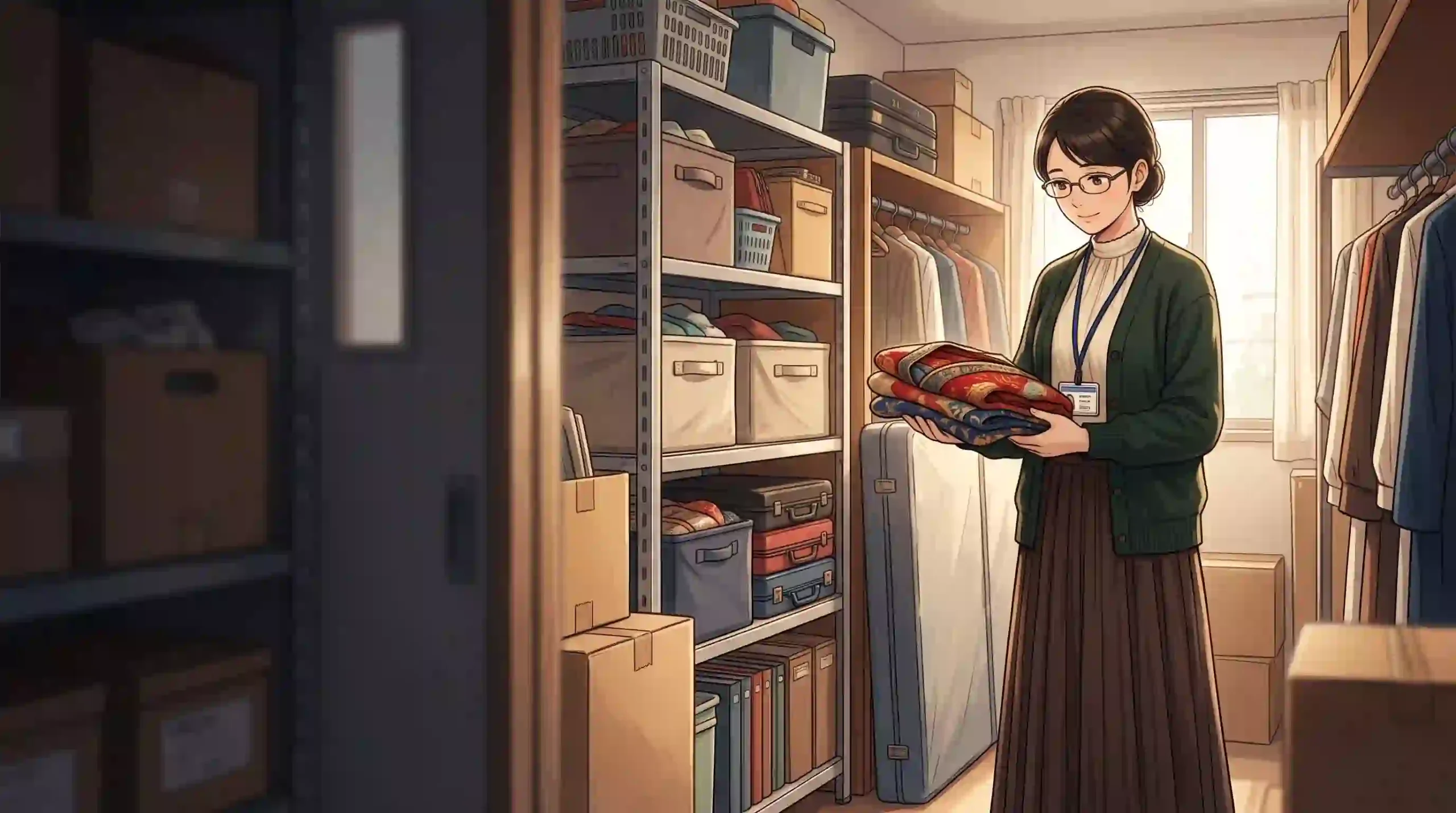
A quiet teacher, an unexpected discovery, and a private fascination with clothing set the comic premise of Toki-sensei wa Kigaetai in motion. Created by Toshinori Takayama, this Japanese manga blends school-life comedy, slice-of-life storytelling, and adult-oriented cosplay humor. This guide explains the premise, creator, genres, tone, themes, publication details, and reader considerations using publisher information as the factual anchor. It is designed to help you decide whether the series suits your tastes without spoiling its central setup.
Quick answer: what is Toki-sensei wa Kigaetai about?
Toki-sensei wa Kigaetai is a manga by Toshinori Takayama about Shisoya Toki, a reserved schoolteacher whose interest in clothing becomes the source of playful, adult-leaning costume comedy. The official Japanese publisher describes her as a taciturn teacher who is often misunderstood as cold or unfriendly. An encounter with new bloomers in the old school building sparks the story’s initial comic situation.
The title is also rendered in English as Ms. Toki Wants to Change Clothes or Toki-san Wants to Change Clothes. The Japanese title is 時先生は着替えたい. English title wording can vary by catalog or fan translation, so the Japanese title is the clearest identifier when searching bibliographic records.
At a glance: series facts
| Detail | Information |
|---|---|
| Japanese title | 時先生は着替えたい |
| Common romanized title | Toki-sensei wa Kigaetai |
| English title variants | Ms. Toki Wants to Change Clothes; Toki-san Wants to Change Clothes |
| Creator | Toshinori Takayama (高山としのり) |
| Publisher | Nihon Bungeisha |
| Imprint | Nichibun Comics |
| First collected volume | Volume 1 published December 27, 2023, according to the publisher |
| Original serialization | Manga Goraku, according to publisher materials and series listings |
| Broad categories | Seinen, school life, slice of life, comedy, ecchi/adult-oriented humor |
| Central character | Shisoya Toki, a quiet teacher with a fascination with clothes |
| Content note | Suggestive costume humor; intended for mature readers, not young children |
The story premise, without spoilers
Teacher Shisoya Toki appears aloof to everyone around her due to her reserved demeanor. The publisher’s description says students call her a “disappointing beauty teacher,” a teasing label that captures the contrast between her appearance and the impression she gives. Her inner world, however, contains an enthusiasm that others may not expect: she is strongly drawn to clothes.
The opening setup brings that interest into focus when Toki discovers a new pair of bloomers while sorting supplies in an old school building. The publisher presents this moment as the spark that releases her curious, clothing-focused side. From there, the premise supports costume-based comedy and a series of playful changes in appearance.
The hook is neither a high-stakes game nor a convoluted mystery. It is the contrast between Toki’s reserved public image and her energetic private curiosity. Readers who enjoy character-led comedy may find that contrast more important than plot twists. The series builds its identity around a recognizable comic pattern: an outfit or clothing-related situation reveals another side of the teacher.
Who created the manga?
Toshinori Takayama is credited by Nihon Bungeisha as the author of Toki-sensei wa Kigaetai. Series catalog records also credit Takayama with both writing and artwork. The publisher’s author page lists multiple collected volumes of the series, and its book listings identify Takayama as the creator.
For a reader researching a manga, creator and publisher details matter because they help distinguish the work from similarly named titles or unofficial uploads. The Japanese publisher is the most direct source for the collected editions, ISBNs, release information, and official series description. Retailer listings may show local availability, but their dates, translations, and metadata can differ between countries.
What does the title mean?
“Toki-sensei” (Teacher Toki) is used with the phrase “she wants to change clothing” in the Japanese title, �������������.” A natural English rendering is “Teacher Toki Wants to Change Clothes.” Published or catalog English variants shorten or adjust that phrasing, which explains why readers may encounter more than one version.
Searchers should try the Japanese title, the romanized form, and the English variants when looking for an official book record. Use creator name “Toshinori Takayama” as an additional identifier. This approach helps avoid confusing the series with unrelated manga about teachers, fashion, or school life.
Genre and tone: what kind of manga is it?
Although the manga uses a number of labels, each one highlights a distinct facet of the reading experience:
- Comedy: The central humor comes from contrast, embarrassment, and the unexpected way clothing changes Toki’s presentation.
- Slice of life: The setup is grounded in ordinary school surroundings rather than a fantasy world or a large-scale action plot.
- School life: The premise is shaped by Toki’s profession and the educational environment.
- Seinen: This demographic label generally signals a manga marketed to adult men; it does not itself define the story’s quality or every reader’s suitability.
- Ecchi or adult-oriented humor: Catalogs use these labels because the series includes suggestive costume-focused material.
The publisher describes the series with a mix of sexy and cute costume appeal. That description is a useful tonal shorthand, but prospective readers should expect a suggestive presentation rather than assume the work is a conventional school comedy for all ages. Genre tags can vary across databases; use them as guidance, not as a substitute for checking the publisher’s edition information and your own comfort level.
Meet Shisoya Toki
Shisoya Toki is the center of the series. Her reserved manner creates a gap between how others interpret her and what motivates her. The “cold” or “unfriendly” impression is part of the premise, not proof that she lacks feeling or personality. Her enthusiasm for clothing provides a window into a more curious and expressive side.
That contrast gives the character a simple but effective comic engine. Toki’s appearance and demeanor encourage other people to make assumptions; clothing situations then unsettle those assumptions. Readers can follow how costume changes become a form of self-expression and a source of humor, rather than treating each outfit as a disconnected visual gag.
Because the story is built around a teacher in a school setting, the role and setting should be understood clearly. The series is an adult-oriented manga, and its suggestive elements are not a signal that it is intended for children. Parents and gift-givers should check the publisher’s age guidance or the retailer’s classification before choosing it for a younger reader.
Why clothing is central to the story
Clothing is more than a visual theme in this manga. It creates the situations that drive the comedy, shapes the way Toki is perceived, and gives her a way to explore different looks. Each outfit can alter the mood of a scene: a familiar character suddenly appears playful, dramatic, cute, or bold.
Costume-centered humor can work well in episodic stories because an outfit offers an immediate setup. The reader recognizes a change at a glance, while character reaction provides the punchline or emotional beat. In this series, the clothing motif also connects to Toki’s private interest, which keeps the recurring joke tied to her personality.
For readers who enjoy fashion or cosplay as visual storytelling, the appeal may include design, silhouette, and the transformation of a character’s image. For readers who prefer plot-heavy drama, repeated costume scenarios may feel more central than long arcs or elaborate world-building. Knowing this emphasis in advance makes it easier to judge fit.
What readers may enjoy
The series is likely to appeal to people who enjoy a compact, character-first premise and a light comic rhythm. Its core idea is easy to understand, and the contrast between reserved Toki and her clothing interest supplies a clear reason to keep turning pages.
You may enjoy it if you like:
- A character whose public image differs from her private interests.
- School-life settings used for comedy rather than intense drama.
- Fashion, costume changes, and cosplay-inspired visuals.
- Episodic humor with a recurring central premise.
- A blend of cute presentation and suggestive comedy.
- Adult manga that favors playful situations over complicated world-building.
It may be a weaker match if you want a serious teacher drama, an all-ages school story, a fashion-industry narrative, or a plot driven mainly by suspense. The strongest reason to sample it is the specific comic pairing of a quiet teacher and her enthusiasm for clothes.
Is it suitable for younger readers?
No. The series is categorized with adult-oriented and ecchi material in manga catalogs, and the publisher markets it with suggestive costume language. A school setting does not make it a children’s title. Adults should check the classification attached to the edition sold in their region, since ratings and retail policies can differ.
If you are buying it as a gift, do not rely on the cover, the word “comedy,” or a general manga label alone. Confirm the local publisher or retailer’s age guidance. If a reader is uncomfortable with sexualized costume humor, this is probably not the right choice even if they enjoy slice-of-life manga.
Publication and reading guide
Nihon Bungeisha’s official listing identifies the first collected volume as a Nichibun Comics release published on December 27, 2023, with ISBN 9784537147278. The publisher’s author page lists multiple volumes, including later collected editions. Catalog databases may show additional serialization or translation updates, but those records can change as new chapters and releases appear.
For a reliable reading path, begin with volume one and follow the publisher’s collected-volume order. This lets the premise introduce Toki and the recurring humor in the intended sequence. Readers buying digitally should confirm the edition’s language, region, price, and age rating before purchase; availability and translated editions may vary by storefront.
A useful checklist before reading:
- Search by the Japanese title or the creator’s full name to verify the series.
- Confirm the publisher, volume number, and ISBN for print editions.
- Check whether the edition is in Japanese or an officially licensed translation.
- Examine the content description and age rating for your area.
- Follow the publisher’s volume order rather than relying on chapter numbering from unofficial catalogs.
How the manga uses character contrast
A character comedy needs a trait that can produce more than one joke. Toki’s contrast does that work: silence and reserve set expectations, while her interest in clothing gives scenes a chance to overturn them. That basic structure is accessible even to readers who do not know much about fashion or Japanese school settings.
The contrast also creates room for visual storytelling. A reader can see a transformation before a character explains it, and a costume can signal a different mood without requiring a long speech. This suits manga, where panel composition, expression, and clothing design can communicate quickly.
The premise is intentionally focused. It does not promise a broad social study of education or a detailed account of the fashion business. The comedic circumstances are driven by the character’s obsession, while the school serves as a familiar backdrop. This distinction keeps the title from being confused with a serious professional drama and helps set reasonable expectations.
Themes: self-expression, perception, and play
The most apparent theme is self-expression through appearance. Clothes can be practical, decorative, humorous, or emotionally revealing. Toki’s interest suggests that getting dressed is not only a routine but also a way to experiment with identity and mood.
A second theme is the distance between first impressions and private character. Others see a quiet teacher and infer coldness; the reader learns that this exterior does not tell the full story. The comic effect depends on that mismatch, but it also makes the character more than a single visual joke.
A third theme is play. Costumes invite performance: a person can step into a different image for a moment and enjoy the change. The manga treats that transformation as a source of humor and visual appeal. Readers should still recognize its adult-oriented framing and decide whether that treatment suits them.
How to find trustworthy series information
Manga metadata can become confusing when unofficial scan sites, fan translations, and retailer pages use different spellings or release dates. The publisher’s own catalog should be your first choice for reliable bibliographic information. The Nihon Bungeisha book entry confirms the creator, series, imprint, publication date, and ISBN for volume one. Its author page provides a broader list of Takayama’s works and the series volumes.
A publication listing does not necessarily confirm the current availability of every translated edition. Retail storefronts are useful for checking what can be purchased in a particular country, but their stock and language labels are local and may change. Avoid treating an unofficial chapter index as proof that a particular translation is licensed or complete.
For this guide, factual series details are grounded in three primary or direct catalog sources: Nihon Bungeisha’s official volume-one listing; Nihon Bungeisha’s author page for Toshinori Takayama; and the publisher’s Manga Goraku magazine listing, which names the series and creator. These sources establish the work’s identity and publisher details. Interpretive comments about tone and likely audience are reader guidance, not claims made by the publisher.
Toki-sensei wa Kigaetai compared with similar manga
Cosplay manga, adult school-life comedies, and slice-of-life tales with eccentric protagonists might also be of interest to readers looking for this title. The useful distinction is the specific source of humor. Here, the hook is not simply “a teacher at school”; it is the contrast between Toki’s reserved image and her clothing-focused enthusiasm.
| If you want… | How this series may fit |
|---|---|
| Cosplay and outfit changes | The main idea and esthetic appeal |
| A dramatic school plot | Not the primary selling point indicated by the publisher synopsis |
| A shy or reserved lead | Toki’s quiet presentation is central to the setup |
| Family-friendly comedy | The adult-oriented, suggestive classification makes it a poor assumption |
| Fashion-industry detail | Clothing matters, but the premise is character comedy rather than a professional fashion study |
| A simple entry point | The central hook is easy to understand from the first-volume description |
These comparisons describe likely reader expectations; they are not a ranking of the series against other works. Whether you like its unique combination of character contrast and costume humor will determine how well it matches.
Common misconceptions about the title
“Because it takes place at a school, it is a children’s manga.” Age appropriateness is not determined by the school environment. Catalogs classify the series as adult-oriented, and its publisher description points to suggestive costume content.
“It is mainly a fashion guide.” Clothes are the recurring theme, but the story is described as comedy and costume-focused entertainment, not a practical guide to design or styling.
“The English title is unique.” Different representations are used in catalogs. The most reliable search terms are Takayama’s name and the Japanese title.
“A chapter listing demonstrates the legitimacy of a translation.” A chapter page cannot prove licensing on its own. Check the publisher or a recognized local publisher for licensed editions.
“The character is simply cold.” The premise presents that impression as a perception other people have. The humor comes partly from the reader discovering more about her than that first impression suggests.
What makes the premise easy to understand?
The title communicates its central idea directly: Teacher Toki wants to change clothes. A clear title, an identifiable lead, and one recurring interest make the series simple to describe in a sentence. That clarity helps readers decide quickly whether the concept appeals to them.
The premise is also visually adaptable. Clothing provides a natural reason for a character’s appearance to shift from one scene to another, while Toki’s restrained demeanor makes the contrast legible. A reader does not need extensive background information to understand the joke, which makes the series approachable for adults curious about a light, costume-led manga.
Clarity does not mean every reader will like it. The adult-leaning treatment and recurring costume focus are central qualities, not incidental details. The best recommendation is therefore a transparent one: sample it if that mix sounds fun, and choose another series if you want a non-suggestive or plot-dense story.
Reader questions to consider before starting
Before picking up a volume, consider what you want from a manga. Do you enjoy a repeating comic premise, or do you prefer every chapter to move a long plot forward? Do you like costume changes as visual humor? Are you comfortable with suggestive material? These questions are more useful than a broad genre label alone.
Also consider where you are reading. Japanese editions, translated editions, and digital releases may appear at different times. The publisher’s catalog is best for confirming Japanese edition details, while local licensed publishers and retailers can confirm what is available in your language. Always verify the specific volume and its classification rather than assuming all listings describe the same edition.
Frequently asked questions
1. What is Toki-sensei wa Kigaetai about?
It follows Shisoya Toki, a quiet teacher whose enthusiasm for clothing leads to playful, suggestive costume comedy. The initial premise begins when she finds new bloomers while sorting supplies in an old school building.
2. Who wrote and illustrated the manga?
Toshinori Takayama is credited as the creator. Publisher and series catalog listings identify Takayama as the author, and catalog records credit the same creator with the artwork.
3. What does the title mean in English?
A natural translation is “Teacher Toki Wants to Change Clothes.” English listings also use forms such as Ms. Toki Wants to Change Clothes and Toki-san Wants to Change Clothes.
4. Is the series appropriate for children?
No. It is associated with adult-oriented, ecchi, and suggestive costume humor. Check the age rating on the exact edition before buying or recommending it.
5. What genres describe the series?
Common labels include seinen, school life, slice of life, comedy, and ecchi. Tags differ among catalogs, but the core appeal is character-led costume comedy with an adult-leaning tone.
6. Where should I start reading?
Start with volume one and continue in the publisher’s collected-volume order. Confirm the language, publisher, and age rating of the edition you choose, because regional availability can differ.
Final take: should you read it?
Toki-sensei wa Kigaetai is a focused choice for adult readers who want a light, visually driven comedy built around an unexpected side of a reserved teacher. Its clothing motif gives the story a clear identity, while Toki’s contrast between outward composure and private enthusiasm supplies its recurring humor. The official publisher’s description and book listing make the premise and creator easy to verify.
It is not a universal recommendation: the suggestive costume angle is a key part of the experience, and the school setting should not be mistaken for an all-ages label. If that tone suits you, begin with the first collected volume and see whether Toki’s mix of quiet charm and clothing obsession works for you. If you have read it, share what you think makes the character or costume comedy memorable; thoughtful reader perspectives help others choose their next manga with confidence.