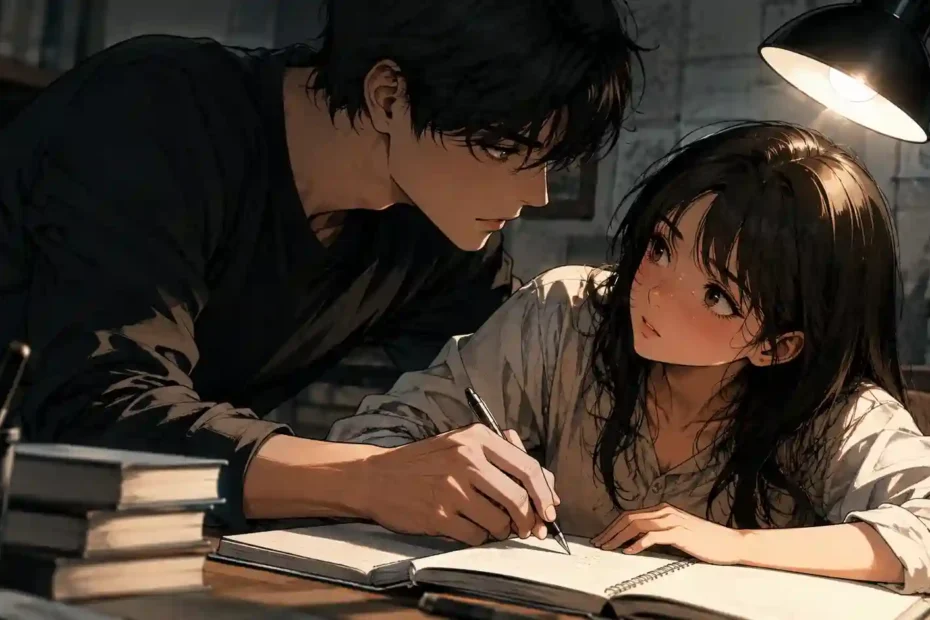
THE HOOK & INTRODUCTION
That early “I’ll teach you” promise stops feeling innocent the second the story shows what the teacher actually wants. The comic doesn’t scream its twist. It lets it leak out through stares, pauses, and scenes that feel one step too close to be “just tutoring.”
People aren’t reading Teach Me First comic for plot fireworks. They’re reading to see which line gets crossed next—and whether the characters admit what’s really happening. This article breaks down the story’s core appeal, the character psychology, the visual language, and the big fan questions. No recycled summaries. No copied phrasing. Just a critic’s take written for readers who want specifics.
QUICK FACTS DATA TABLE
| Series Metric | Details |
|---|---|
| Title | Teach Me First |
| Author/Artist | Check the official listing (varies by platform/translation) |
| Type (Manga/Webtoon/Comic) | Comic (manga-style romance/drama) |
| Publisher/Platform | Varies by official release source |
| Current Status (Ongoing/Completed) | Depends on the official page status |
| Genres | Romance, Drama, Mature Relationship Tension |
| Age Rating | Check platform rating before reading |
CONTENT CORE & ANALYSIS
Plot & Character Dynamics: The Real Story Behind “Teach Me First”
The smartest thing Teach Me First does is hide its true genre in plain sight. On the surface, it sells a familiar hook: one character needs guidance, the other offers it, and time together turns into attraction. But the longer you read, the clearer it gets—the “lesson” is a cover story.
This comic is built around a relationship imbalance that keeps shifting. Some chapters make the teacher look protective. Others make them look possessive. That inconsistency isn’t a mistake. It’s the point. The series wants you to feel the push-pull of someone who can be gentle in one panel and manipulative in the next.
What keeps readers glued is how often the story weaponizes everyday moments:
- A correction that could be normal… until it lingers.
- A compliment that could be harmless… until it gets personal.
- A rule that sounds reasonable… until it’s used to box someone in.
Instead of relying on constant cliffhanger shocks, the comic tightens tension through repetition. Each “session” creates a new pattern. Then the pattern breaks.
Why the characters feel messy (and why that works)
A lot of romance stories flatten their leads into types: the cold one, the sweet one, the jealous one. Teach Me First gets more mileage by letting the characters contradict themselves.
The learner often reads like someone who’s trying to improve their situation but doesn’t know what kind of attention is safe. They mistake consistency for care. They chase approval because it feels like progress—even when it’s emotional quicksand.
The teacher reads like someone who enjoys being needed and hates being questioned. They want closeness, but they want it on controlled terms. When the student starts showing independence, the teacher’s behavior can swing—either they soften into honesty, or they tighten into control.
That’s why “teach me first” as a phrase feels loaded. It can mean “help me.” It can also mean “shape me.”
The story beats that readers remember
Even if you don’t quote chapter numbers, you can point to the kind of scenes that define the series:
- The first time the student realizes the teacher is watching them when they aren’t “working.”
- The first time a boundary gets set—and then tested in the very next interaction.
- The first time jealousy shows up, not as comedy, but as pressure.
These are the hinges. They change how you interpret earlier scenes on a reread.
Art Style & Visual Flow: Manga Techniques That Boost the Drama
Calling it a manga-style comic isn’t just a vibe thing. The storytelling language is built around manga habits: reaction-first pacing, tight close-ups, and silence used as impact.
Paneling that makes tension feel physical
The series leans hard on proximity as a visual theme. You’ll often see the characters framed closer than necessary. Not in an action-hero way—more like the camera is invading their space on purpose.
Common high-impact choices:
- Close-up panels on eyes right before a line that changes the mood.
- Hand shots used as “confession panels” without dialogue.
- Cutaway panels that show an object (desk, phone, door, notebook) right after a risky moment—like the comic is giving you a breath before it squeezes again.
In many romance comics, the art exists to decorate the dialogue. Here, the art often contradicts the dialogue. A character says “Relax,” but the panel shows tension in their posture. That dissonance is the hook.
Pacing: why it’s so bingeable on mobile
The pacing tends to stack mini-payoffs:
- scene setup
- emotional nudge
- awkward silence
- escalation
- quick stop
- lingering aftermath
That stop-and-go rhythm is addictive because it simulates real messy flirting: forward, back, then forward again.
Where the visual storytelling can improve
If the comic falls into repetition, it’s usually during extended talking sequences where angles don’t change much. The best chapters break that pattern with motion—someone stands, someone turns away, someone blocks a doorway, someone reaches out too late. Those movements matter because this story is about control, and control is physical as much as it’s emotional.
Themes & Reader Reactions: Romance Fantasy or Red-Flag Study?
This is the question that drives the comments and the search traffic.
Some readers treat the series like a spicy slow-burn romance. They focus on chemistry, tension, and the “will they admit it” energy. Other readers see it as a story about boundaries—how power can hide inside “help.”
What makes Teach Me First popular is that it feeds both readings. It flirts with tenderness while hinting at something darker. That’s a dangerous combo, because it makes every sweet moment feel like it might come with a price.
The three questions the comic keeps asking (without saying them)
- If someone guides your life, are they doing it for you—or for themselves?
- When does protection become possession?
- If the student chooses it, does that erase the imbalance?
The series stays interesting when it doesn’t dodge these questions. The second it tries to smooth them over, readers notice.
Teach Me First Comic FAQ
Q1) Where can I read Teach Me First Comic officially?
Look for the platform that lists creator credits, licensing info, and a complete chapter catalog. If the site has heavy pop-ups, missing credit pages, or inconsistent chapter order, it’s usually a reupload. If you share your reading source, I can help you verify whether it’s official.
Q2) Is Teach Me First Comic ongoing or completed?
Check the official series page for a clear status label like Ongoing or Completed. If your source doesn’t show a status badge, you may be reading a mirrored version that won’t reflect the real release.
Q3) What genre is Teach Me First—romance or drama?
It plays as both. The structure is romantic (proximity, tension, escalating intimacy), but the emotional engine is drama (boundaries, leverage, consequences). That blend is why it sticks with readers longer than a simple “will-they-won’t-they.”